
Welcome to My Blog
Ms. Mable Chan, JP
Secretary for Transport and Logistics
Secretary for Transport and Logistics
June 27, 2026
Hong Kong is named after and has thrived on its port. It remains a subject of ongoing and deep reflection for the Transport and Logistics Bureau (TLB) to fully leverage the potential of our port. Last week, the Director of the Hong Kong and Macao Work Office of the Communist Party of China Central Committee and the Hong Kong and Macao Affairs Office of the State Council, Mr Xia Baolong, visited the Kwai Tsing Container Terminals. His care for the development of Hong Kong's maritime industry shows the nation's substantial support for Hong Kong. While promoting the upgrading and transformation of our port, we must accelerate the development of high value-added maritime services and the concept of creating a synergy of financial and maritime services has injected new impetus into the local economy.
In the National 15th Five-Year Plan, the Central Government has, on the foundation of the "eight centres" outlined in the 14th Five-Year Plan, further reinforced Hong Kong's core strategic positioning by proposing a brand-new blueprint comprising "ten centres", "two major hubs", "one ecosystem", "one metropolis" and "one hub", anchoring the direction of Hong Kong's development. The strategic positioning bestowed upon Hong Kong by the nation serves as a lighthouse on our voyage. By synergising Hong Kong's status as an international maritime centre and an international aviation hub with our institutional advantages under the "one country, two systems" principle and our traditional edges in finance and trade, and by integrating them with the new strategic positioning, we can deliver to the world our high value-added "Hong Kong Solutions". Steering Hong Kong's transformation into a global maritime capital is at the very core of our work.
Data empowerment: breaking down data silos in the logistics industry
Digitalisation is a crucial step in leaping from quantity to quality. The Port Community System (PCS) developed with government funding of over HK$200 million is a vital digital infrastructure in advancing Hong Kong's smart port development. The PCS has successfully broken down the long-standing data silos in the logistics industry and resolved the information asymmetry faced by micro, small and medium-sized enterprises. Businesses connected to the system can enjoy a one-stop platform for real-time cargo tracking, as well as features including cross-boundary customs declaration and analytical alerts. Since its official launch in mid-January this year, the number of registered enterprise users has surged to over 6 500, with an average of nearly 100 new enterprises joining every week.
I have mentioned multiple times in my previous blog entries the convenience the PCS brings to the industry's operations. As the saying goes, "data is king". The true value of the PCS lies in its capability to refine data into core information that offers insights into the future, making it an innovative strategic resource that breaks down industry barriers.
I earlier on visited the PCS Control Room and met with Simon Wong, the Chief Executive Officer of the Logistics and Supply Chain MultiTech R&D Centre (LSCM) responsible for developing and operating the system, and his team. Simon highlighted the competitive edges of the PCS: it goes beyond logistics monitoring to create greater value through system-generated trusted data. "We can verify not only that the cargo has been loaded onto a ship, but also the authenticity of the shipment," he said. The key lies in the system's use of blockchain technology to record cargo data, equipping it with the credibility of official certification. These data are of paramount importance to business operations, directly influencing risk management practices such as corporate financing, fund disbursement and insurance procurement.
The TLB signed a tripartite Memorandum of Understanding with LSCM and FUNDel, a local fintech logistics start-up, to jointly promote the use of cargo flow data on the PCS, thereby facilitating financial institutions' approval of trade finance applications filed by the logistics sector. Currently, 15 local banks have expressed interest in connecting to the system. Among them, FUNDel, Bank of China (Hong Kong), and Hang Seng Bank have successfully explored cases of application under a pilot scheme, covering logistics SMEs and various types of enterprises. Two cross-boundary logistics companies have benefitted from the drastically streamlined bank reviewing procedures enabled by the PCS' provision of trusted operational data of the companies, and were respectively offered with significantly lower interest rates and faster loan approvals by their lending digital bank and major local bank, effectively addressing the pain points of difficult financing and slow verification.
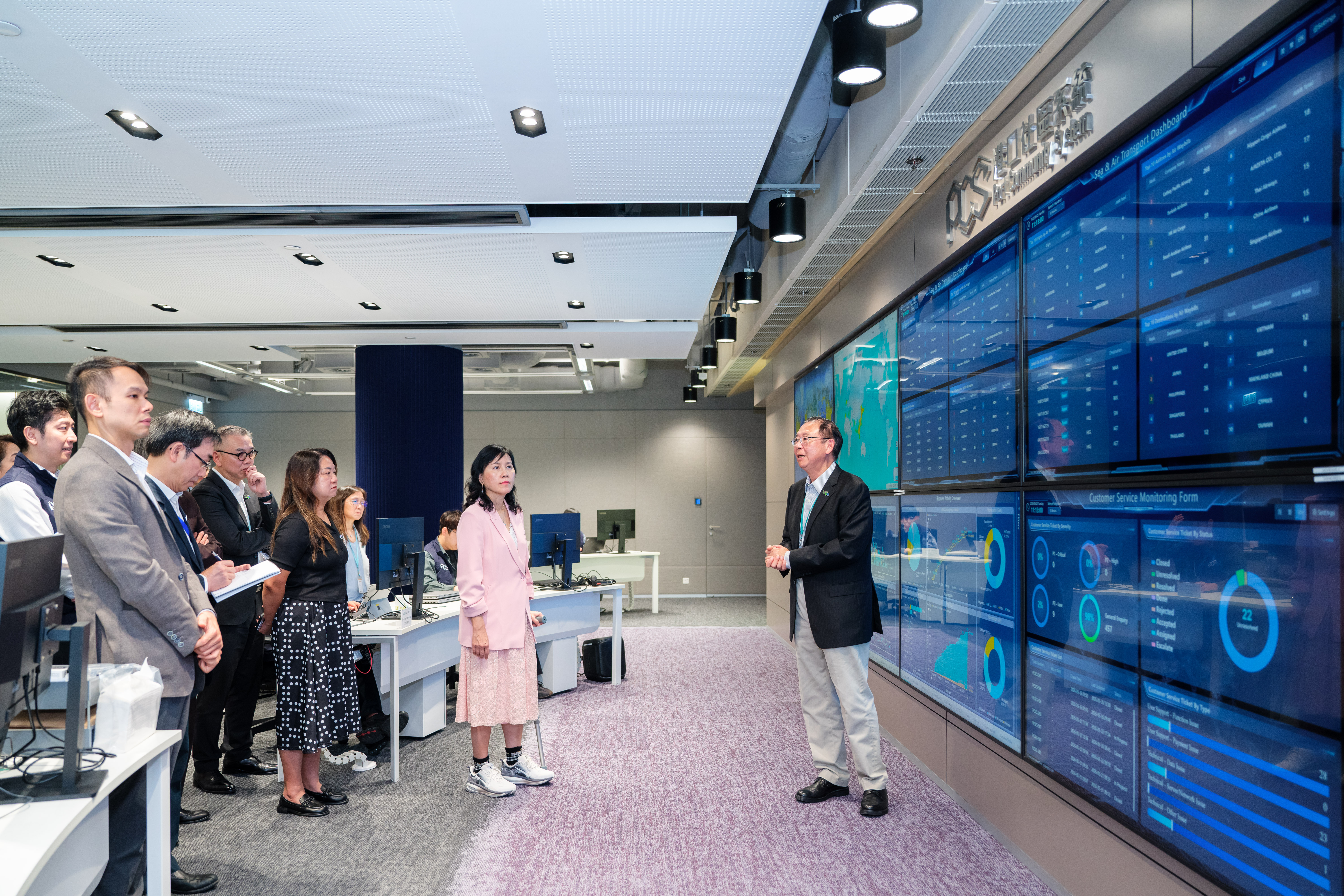

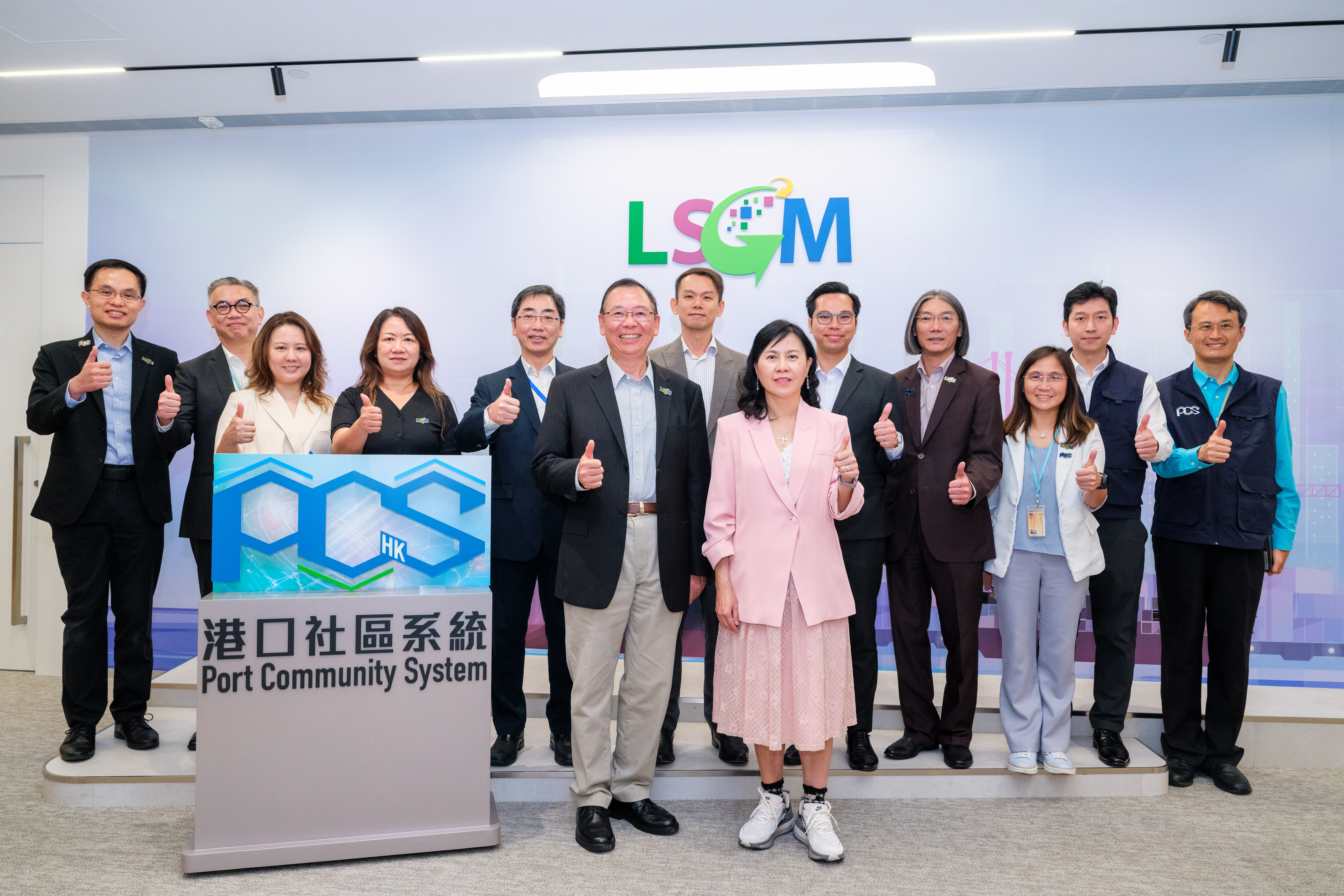
I earlier on visited the PCS Control Room and met with Simon Wong, the Chief Executive Officer of Logistics and Supply Chain MultiTech R&D Centre responsible for developing and operating the system, and his team.
Innovative technologies as shipping industry's best partner
The PCS is also leveraging various innovative technologies in developing more diversified value-added services to bring greater convenience to the industry. Notably, the system is exploring to analyse the data collected in collaboration with Tsinghua University and the Hong Kong Polytechnic University on real-time global vessel locations, transit report and real-time port traffic distribution, with a view to assisting the trade in identifying the most cost-effective solutions for slot allocation and supply chain workflow. Furthermore, the system is studying to apply the Hong Kong Science and Technology University's storm forecasting technology on data analysis to enable timely vessel rescheduling of shipping companies. Through collaborations among the Government, industry, academia and research sectors, the PCS is an excellent example of transforming innovative technologies and ideas into practical applications. The system is also developing an offshore cargo tracking function, while exploring to establish connectivity with overseas and mainland ports, as well as global maritime data platforms. In the future, even if a cargo bypasses our port, the PCS will still be able to provide core logistics data to local enterprises engaged in international offshore trade and global corporations, serving as a "super-connector" in global logistics data.

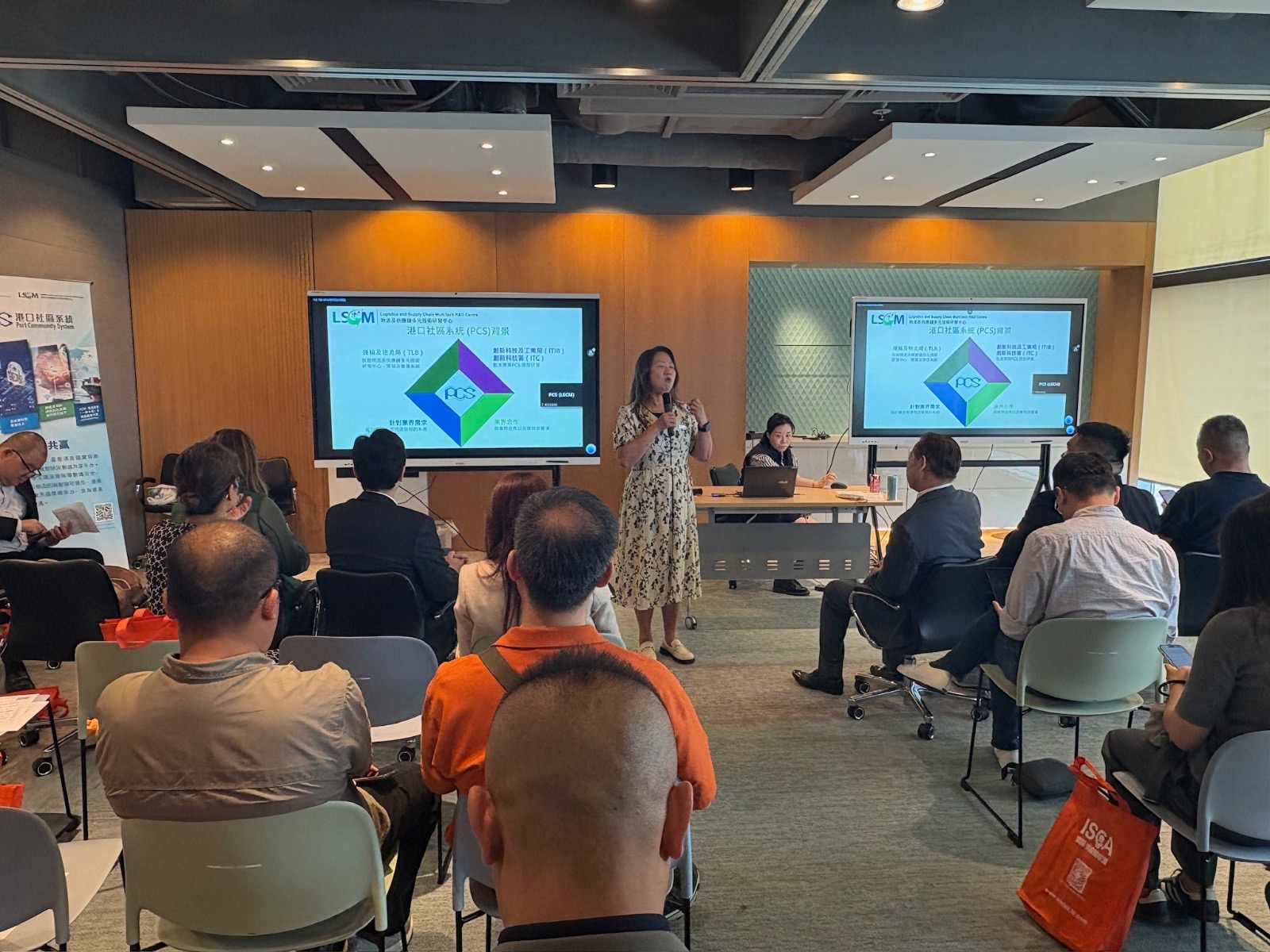
Since the official launch of the PCS in mid-January this year, the number of registered enterprise users has surged to over 6 500, with an average of nearly 100 new enterprises joining every week.
Leveraging fundamental strengths to connect with high-end maritime services
A key digital infrastructure spearheaded by the TLB that connects the shipping, finance and trade sectors, the PCS also reflects Hong Kong's opportunities ahead as an international shipping centre. By targeting new markets, giving full play to Hong Kong's inherent advantages and creating new values, as well as forging synergy among the high value-added maritime services cluster, the commodity trading ecosystem as well as the international hub for high-calibre talents, our team is making every effort in driving the new strategic positioning of Hong Kong, consolidating and enhancing Hong Kong's status as an international shipping centre, and making the most of our maritime and port industry.
Amid the complex and volatile geopolitical landscape, global supply chains are undergoing accelerated reshaping with a keen demand for flexible and versatile high-end maritime services. We fully support the China Shipowners Mutual Assurance Association's establishment of the Hong Kong Shipowners Mutual Assurance Association, as well as the trade's setting-up of the first-ever dedicated marine risk pool in Hong Kong, to provide safe and diversified protection and indemnity options for global shipowners, particularly vessels from Hong Kong and the Chinese Mainland. The trusted data chain of the PCS is launched timely. We will explore leveraging the PCS to assist insurance companies in providing more precise and flexible insurance solutions for vessels, cargo and logistics chain. Furthermore, by utilising trusted freight records, more accurate risk pricing and streamlined claims verification process can be achieved, opening up new horizons for the marine insurance business.
The HKSAR Government introduced the Inland Revenue (Amendment) (Tax Concessions for Shipping-related Activities and Physical Commodity Trading) Bill 2026 to the Legislative Council last Wednesday. The Bill encompasses as many as 55 commodities, covering those commonly using maritime services. It is also another opportunity for Hong Kong to promote high value-added maritime services. On one hand, the Bill enhances the existing tax concessions for shipping-related activities. On the other hand, it introduces a new half-rate tax concession regime for physical commodity trading, attracting more commodity traders to Hong Kong and further strengthening the local maritime services ecosystem.
Commodities including metals and minerals account for more than half of the global shipping volume. The industry can also explore opportunities arising from other types of commodities, including energy and agricultural products. By exploring its robust cargo tracking capabilities, the PCS can monitor the end-to-end logistics status of commodities such as metal and industrial commodities. Through reliable data chain, the system will be able to verify the actual flow and quality of goods for buyers, financial institutions, and asset holders. This not only enhances transaction transparency and financing efficiency, but also supports the development of high value-added professional services such as risk management, trade finance and insurance.
With the institutional advantages under the "one country, two systems" principle, a free market economy, a simple and low tax regime, a bilingual common law system, as well as the distinctive advantages of enjoying strong support of the motherland and being closely connected to the world, Hong Kong has been highly favoured by businessmen worldwide over the years. Fully leveraging our fundamental advantages and the agility of Hong Kong people in the maritime industry's transformation from quantity to quality will serve as the driving force for Hong Kong to forge ahead against the headwinds in becoming a global maritime capital.