
Welcome to My Blog
Ms. Mable Chan, JP
Secretary for Transport and Logistics
Secretary for Transport and Logistics
March 07, 2026
Everyone has been paying close attention to the latest development in the Middle East. The conflicts not only affected the regional safety of the Middle East are, but also disrupted the operations of the nearby airspaces and the Strait of Hormuz, triggering volatilities in the global aviation and shipping markets.
Although the Middle East is far away from Hong Kong, as a highly internationalised city, risks Hong Kong is facing seem so far yet so close. We must strengthen our resilience to cope with the unpredictables. In the Budget announced last week, a series of measures were proposed to promote the development of Hong Kong as an international shipping centre and an international aviation hub, as well as the development of cross-boundary transport infrastructure. The common thread of these measures is to precisely leverage Hong Kong's unique advantages under "One Country, Two Systems” and align with the national development strategies to create conditions for industry partners, with a view to jointly enhancing the competitiveness and resilience of the sectors.
During the “two sessions” being convened in Beijing, the government work report set out the major strategic tasks of the 15th Five-Year Plan, including striving for high-quality development, strengthening domestic circulation, promoting common prosperity for all people, and coordinating development and security. It also pointed out that the efficacy of governance in accordance with the law should be ensured to promote Hong Kong's economic and social developments. In my last blog post, I mentioned that the Transport and Logistics Bureau has established a preparatory group for aligning with the National 15th Five-Year Plan. Together with the Permanent Secretary for Transport and Logistics, Mr Vic Yau, I convened the first meeting of the group to ensure that the parts relevant to the Bureau in the first Hong Kong five-year plan align with our policies, with a view to seizing the opportunities arising.
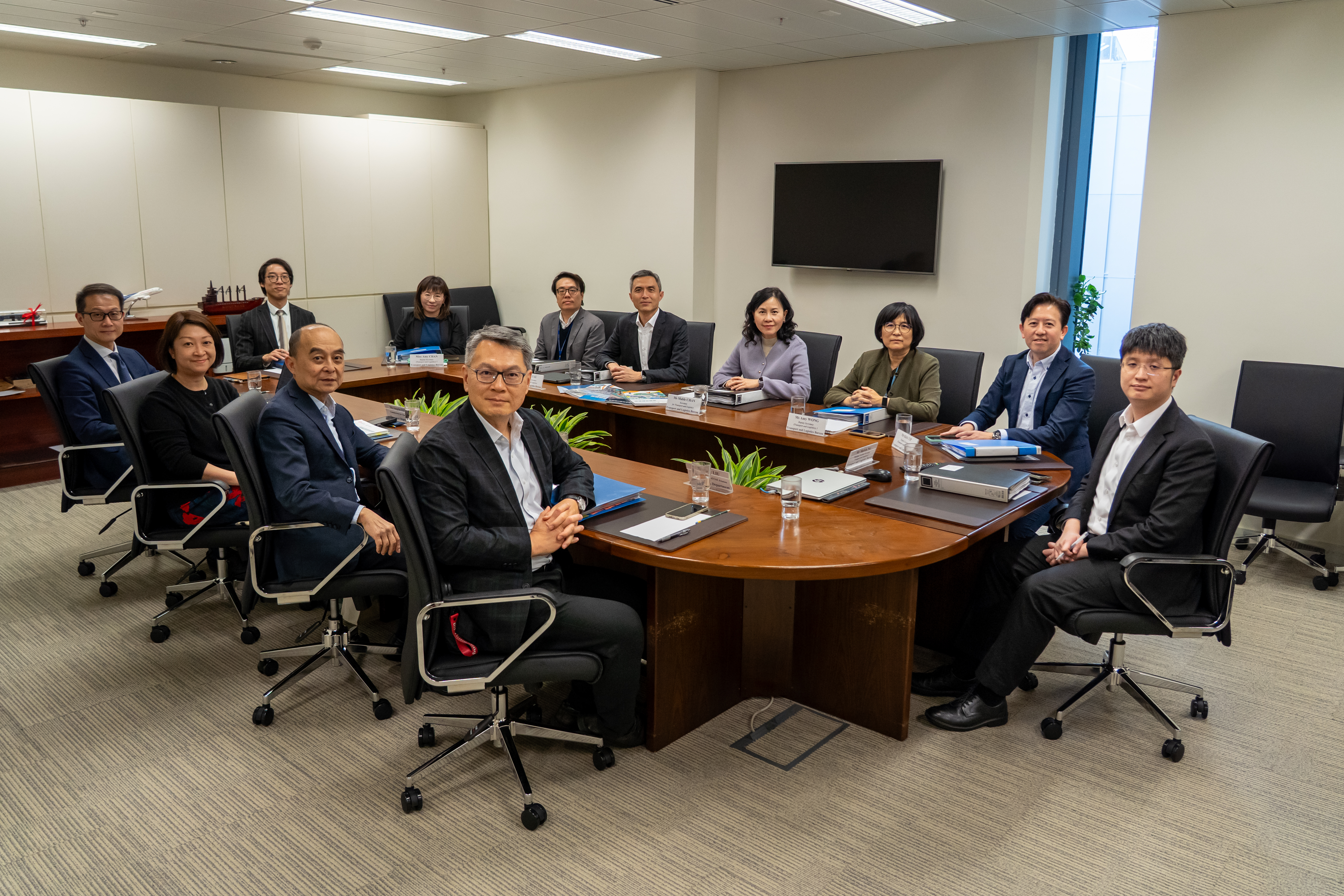
The Transport and Logistics Bureau’s preparatory group for aligning with the National 15th Five-Year Plan is chaired by the Permanent Secretary for Transport and Logistics, Mr Vic Yau. Upon the formal promulgation of the 15th Five-Year Plan, the preparatory group will be converted into a formulation team. I have attended the first meeting of the group to support colleagues in the Bureau to press ahead with the alignment work.
Green shipping
The development of the shipping industry often presents a mix of opportunities and challenges. While our ports are persistently facing significant challenges posed by external factors including the ever-changing global shipping and trade landscape brought by geopolitics as well as keen competition from other ports in the region, Hong Kong, as an international shipping centre, is capitalising on the advantages under "One Country, Two Systems" to anchor its strategic position as a global maritime capital. To address the challenges faced by Hong Kong ports, we have been working together with the industry and striving to create conditions to enhance the competitiveness of the ports, including by implementing a series of measures to promote port developments with enhanced quality and quantity. Embracing the new opportunities under the 15th Five-Year Plan, Hong Kong will further align with the national shipping strategy, achieving comprehensive development in terms of both quality and quantity to strengthen the overall capabilities of Hong Kong's maritime and port industry, thereby ensuring that the international shipping centre will be able to sail steadily amidst adversity.
This year's Budget has stepped up efforts in advancing the smart transformation of the maritime logistics industry and expanding our cargo hinterland to secure more transhipment cargo. The International Maritime Organization has set a target to reach net-zero carbon emissions from international shipping by or around 2050, making decarbonisation a major trend in the global shipping industry. Our key policies and measures in shipping are therefore also centred around the concept of "green".
We promulgated the Action Plan on Green Maritime Fuel Bunkering in late 2024. Last year, there were 110 biodiesel bunkering operations and 16 liquefied natural gas (LNG) bunkering operations conducted in Hong Kong, with over 220 000 tonnes of green maritime fuel bunkered. Entering 2026, CLPe and CNOOC (Shenzhen) International Marine Clean Energy Co., Ltd. collaborated to perform the first LNG bunkering for a Very Large Crude Carrier (VLCC) in Hong Kong waters in late February.
Our colleagues' efforts over the past year including in formulating the Code of Practice and providing duty exemption for green methanol bunkering in Hong Kong are gradually bearing fruit. Two days ago, I witnessed Hong Kong's first green methanol bunkering operation, which achieved multiple "firsts". CIMC Enric supplied green methanol from the production base in Zhanjiang, the first large-scale bio-based green methanol project in our Country with international green certification; China Merchants Energy Shipping arranged for CM HONG KONG, the world's first methanol dual-fuel ro-ro vessel which is Hong Kong-registered, to receive bunkering in Hong Kong; Sinopec deployed the first methanol dual-fuel bunkering vessel of our country to carry out the operation. The operation also established a full-chain co-operation model for green maritime fuel supply and bunkering between Hong Kong and the Mainland: Zhanjiang, a key green methanol production base, is responsible for providing solutions for the production, storage and green transportation of high-quality green maritime fuel; while Hong Kong, leveraging its strengths as the world's seventh, our country's second, and the Greater Bay Area's largest bunkering centre, as well as one of the world's four major international maritime centres, is delivering efficient and safe bunkering services. In fact, the industry is already gearing up for the second green methanol bunkering operation.
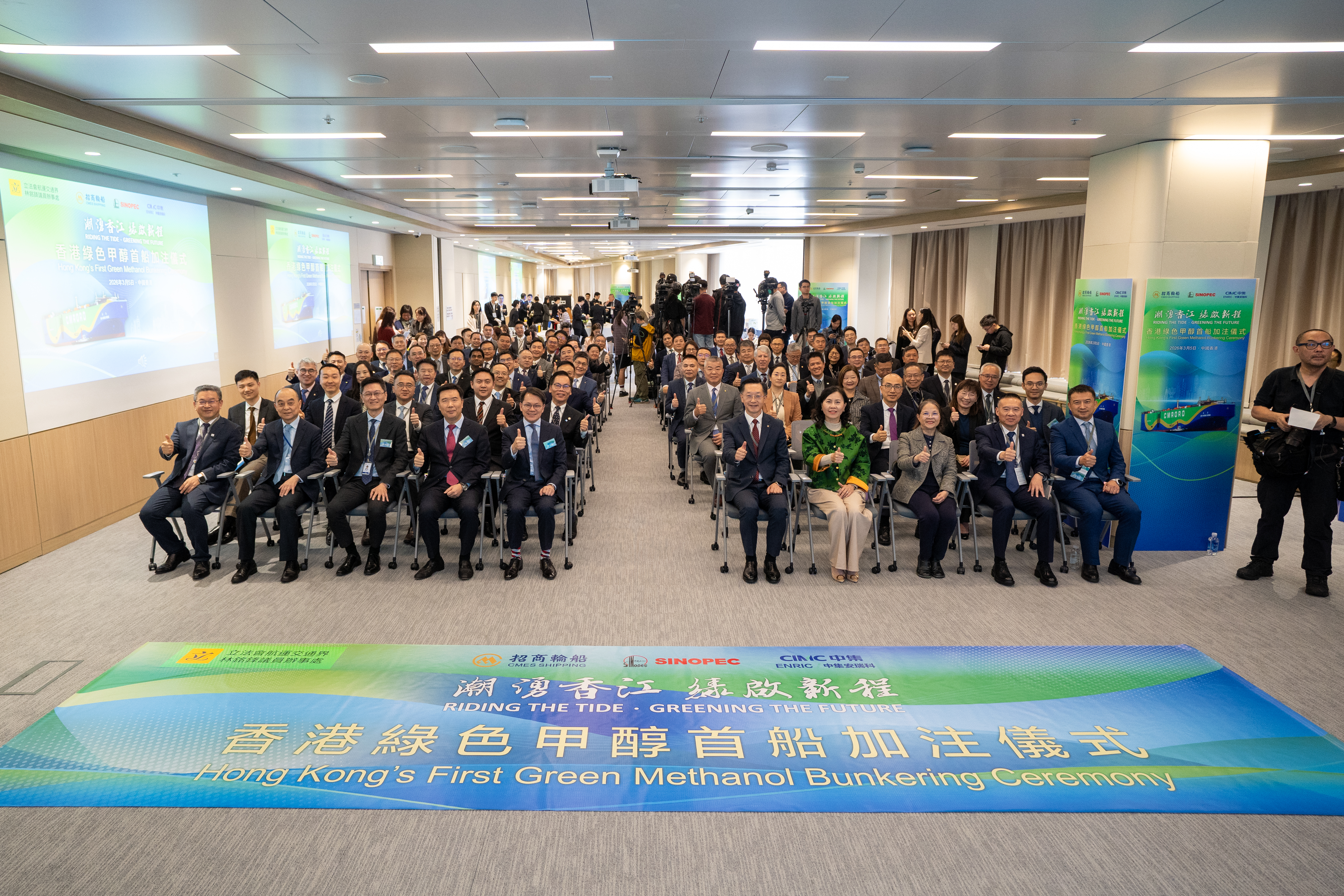
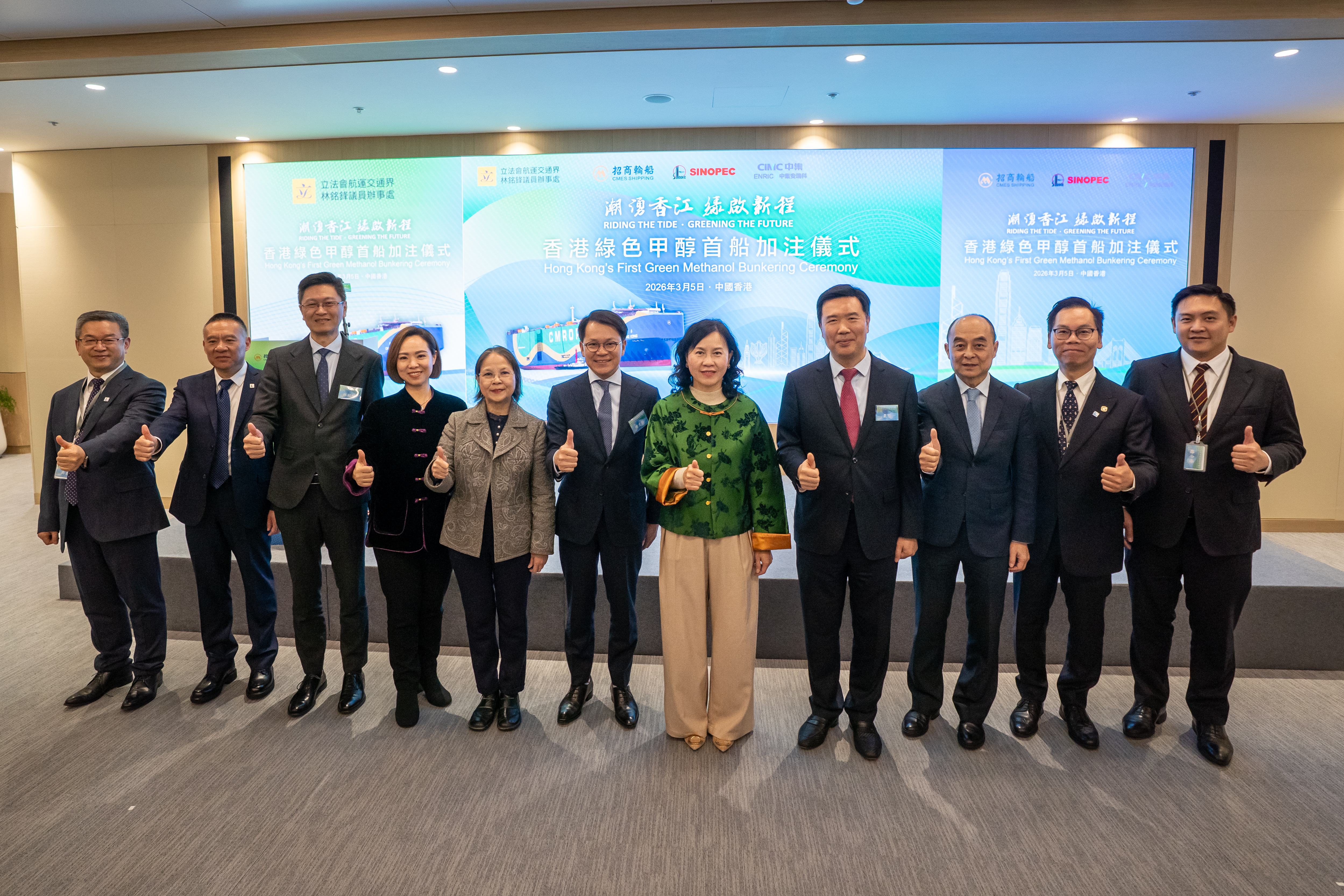
I attended the ceremony for Hong Kong’s first green methanol bunkering earlier on.
Financial and facility support to establish our own fleet brand
To foster the regularisation of the adoption of green maritime fuel bunkering, we are rolling out this fiscal year enhanced green support measures covering various areas including financial incentives, facilities layout and branding support to attract more vessels to Hong Kong.
On financial support, ocean-going vessels currently pay an average of HK$10 000 to HK$30 000 for port facility fees per call in Hong Kong. We will introduce port dues concessions dedicated for green maritime fuel vessels to offer ocean going vessels that use, carry and/or bunker designated green maritime fuels in Hong Kong a 25% or 50% reduction in port fees for a period of three years. The total expenditure involved is approximately HK$10.7 million. The concession measure will commence in mid June this year and is expected to attract more than 1 000 relevant vessel calls or bunkering operations in Hong Kong.
We will also designate anchorages and sheltered spaces for green maritime fuel bunkering vessels to enhance the flexibility of port operations. Upon optimising our port layouts, vessels powered by green maritime fuels will be able to use the various anchorages across the territory for bunkering, and anchorage area available for green maritime fuel bunkering will expand from about 645 hectares at present to approximately 2,877 hectares.
Hong Kong’s shipping registration has long been world leading. To maintain the premier position of our fleet, we will amend the legislation this year to revamp the ship registration arrangements, including permitting dual registration arrangement to cater for the diverse operating models of international maritime enterprises. We will also launch a three-year Green Vessels Registration Incentive Scheme, providing an annual incentive of HK$60 000 to Hong Kong-registered ships powered by green maritime fuels. It is estimated that about 100 green vessels will be attracted to register in Hong Kong during the implementation period. Together with the approximately 70 Hong Kong registered vessels that are currently using eligible green maritime fuels, it is expected that around 170 Hong Kong registered vessels will benefit from the scheme by the 2028/29 financial year. This will help further promote the green fleet of the Hong Kong Shipping Registry and enhance our competitiveness in the international maritime arena.
Synergy of Financial and Maritime Services
Hong Kong possesses strong comprehensive capabilities in port conditions, professional maritime services and overall business environment. We are also keeping pace with global trends while working on all fronts in building our green shipping ecosystem. As clearly proposed in the Recommendations for Formulating the 15th Five-Year Plan, Hong Kong should consolidate and enhance its status as an international financial, shipping and trade centre. Hong Kong’s strengths lie not only in shipping but also in its dual role as a financial and trading hub. Cross sector collaboration will be a key driver for the future development of Hong Kong’s maritime and port sectors.
The global commercial fleet exceeds 100 000 vessels. Currently, only about 1 300 vessels worldwide are able to use green maritime fuels, accounting for just one per cent of the total, even if we include those orders which has yet to be delivered. In view of the carbon reduction targets set by the International Maritime Organization, there will be urgent and on-going demand for green transformation in the global shipping industry. The global green shipping market is expected to grow significantly from US$24.5 billion (approximately HK$191.1 billion) in 2025 to over US$109.6 billion (approximately HK$854.9 billion) in 2034. Substantial capital investments are needed for building new green vessels or retrofitting existing ones. With the common law regime, Hong Kong provides robust legal protection for shipping companies around the world to operate in the city. At the same time, as an international financial centre with free flow of capital, Hong Kong provides flexible and diversified financing channels for international shipping enterprises. Hong Kong is no doubt the most preferred destination for ship financing for shipowners worldwide.
New air cargo facilities to inject new momentum
Hong Kong is often perceived as flexible, diverse and adaptable. In addition to comprehensively strengthening Hong Kong’s competitiveness in shipping, we are also constantly injecting new momentum into aviation, one of our economic lifelines. Following the commissioning of DHL’s expanded hub and the Cainiao Smart Gateway in 2023, I recently witnessed and took part in the stone laying ceremony of UPS's new hub facility at Hong Kong International Airport. The new facility will further enhance our airport's cargo handling capacity and consolidate our position as the world’s leading air cargo hub and e-commerce logistics centre. Expected to be completed in 2028, this new two-hectare express freight facility will handle nearly 1 million tonnes of cargo annually. By then, the overall cargo capacity of Hong Kong International Airport will increase significantly to 9 million tonnes per year.


Following the commissioning of DHL’s expanded hub and the Cainiao Smart Gateway in 2023, I recently witnessed and took part in the stone laying ceremony of UPS's new hub facility at Hong Kong International Airport, which will further enhance our airport's cargo handling capacity.
As the nation’s most internationalised city, Hong Kong’s distinctive advantages under “one country, two systems” and of maintaining close connections with both the Mainland and the world will become even more prominent amidst the ever-changing world. The HKSAR Government will continue the efforts in equipping itself and the industry through policies, infrastructure and initiatives, demonstrating our diversity and resilience in the reshaping global supply chain while giving full play to our role as a “super connector”. We will maintain close ties with our partners in the aviation and shipping industries to jointly formulate plans for future challenges and opportunities.